Keeping
turf in Cairns healthy takes a different approach to the rest of Australia. The region swings between months of heavy monsoon rain and a long drier stretch through the middle of the year, and your lawn responds to both. Feeding, watering and weeding all shift with the seasons. The same lawn can need light, frequent feeding in January and a completely different approach by July. Getting the timing right means less work overall and a lawn that holds its colour through the year rather than recovering from one extreme after another.
Why Cairns' Climate Makes Lawn Care Different
Cairns is defined less by heat than by humidity. Summer temperatures often sit lower than southern capitals, yet humidity regularly climbs above 90 per cent and heavy cloud cover can settle over the region for weeks at a time. That combination changes what lawn care in Cairns actually involves.
Local conditions affect turf in a few specific ways:
- Constant growth: Warm, wet conditions push grass along for much of the year, so mowing rarely stops.
- Nutrient loss: Heavy rain washes fertiliser through the soil profile before roots can take it up.
- Low light: Extended cloud cover slows photosynthesis, which can leave lawns thin and pale even while they are growing.
- Disease pressure: Warmth and moisture together create ideal conditions for fungal problems.
Understanding these pressures makes the rest of the routine much simpler.
A Simple Fertilising Schedule for Cairns Turf
Fertilising turf works best when it follows the seasons rather than a fixed calendar. Turf in Cairns grows for most of the year, so the aim is steady feeding through the growing period while avoiding heavy applications right before major rain.
A straightforward yearly rhythm looks like this:
- Before the wet, roughly October to November: A balanced granular fertiliser builds strength ahead of the rain.
- During the wet, December to March: Feed lighter and more often, since nutrients leach quickly. Liquid products suit this period because they are less prone to washing straight through.
- After the wet, April to May: A recovery feed helps repair thin patches and restore colour, and a trace element product replaces what the rain has stripped out.
- Through the dry, June to September: A slow-release fertiliser generally keeps growth ticking over while the lawn slows down.
Timing usually matters more than the specific product. Fertiliser applied a day before heavy rain often ends up in the stormwater system rather than the root zone, so it pays to watch the forecast. Soil condition plays a part as well, since compacted or water-repellent ground limits how much of any feed the grass can reach. Application rates vary between products and grass types, so follow the directions on the label.
Wet Season Care: Managing Rainfall and Humidity
Wet season lawn care is mostly about managing excess rather than adding more. Saturated soil, soft ground and constant humidity all work against turf, so the focus shifts to drainage, airflow and disease prevention.
A few habits make a noticeable difference:
- Mow more often: Rapid growth shortens the interval between cuts. Removing no more than a third of the leaf at a time avoids stressing the plant.
- Keep blades sharp: Torn leaf tips heal slowly in humid conditions and give disease an easy entry point.
- Stay off waterlogged ground: Walking or mowing on soft soil compacts it and causes damage that lingers well past the wet.
- Watch for fungal signs: Yellow or brown patches spreading outward often point to disease rather than a nutrient shortage.
- Clear drainage paths: Water sitting for more than a day or two starts to kill turf, so check that runoff has somewhere to go.
Dry Season Care: Watering and Recovery
Once the rain eases the challenge reverses. Soil dries out, growth slows and lawns that coasted through the wet can start to look tired. Lawns carrying good root depth into these months cope far better than those fed heavily and watered lightly through the wet, so recovery rewards deep, infrequent watering rather than light daily sprinkles.
Practical steps for the drier part of the year:
- Water deeply: Longer, less frequent watering encourages roots to grow further down, which builds resilience.
- Water early: Morning watering reduces evaporation and lets the leaf dry before nightfall.
- Raise the mowing height: Longer leaf shades the soil, holds moisture and protects the crown of the plant.
- Use a wetting agent: Soil that repels water after drying out absorbs far less of what you apply.
- Check local water rules: Cairns Regional Council restrictions can change, so confirm current watering days before settling into a routine.
Weed Control Without Damaging Your Turf
Weeds move quickly in tropical conditions, particularly once the rain starts. The most effective control pairs a dense, healthy lawn with well-timed treatment, since thick turf leaves very little room for weeds to establish.
Keep these points in mind:
- Time pre-emergent treatments early: Products applied before the wet season stop many weed seeds germinating in the first place.
- Spot-treat with post-emergent products: Targeting visible weeds uses less chemical and puts less stress on the surrounding lawn.
- Check the label against your grass type: Some herbicides damage broadleaf carpet grass and other sensitive varieties, so product choice matters.
- Avoid spraying in extremes: Very hot days or heavy rain shortly after application reduce results and can burn the leaf.
- Fix the underlying cause: Weeds that keep returning usually signal thin turf, poor drainage or low fertility.
When to Call in the Experts
Most lawn problems respond to consistent mowing, feeding and watering. Some do not, and adding more products to a lawn with an underlying issue rarely helps.
It is worth seeking advice when:
- Patches keep returning: Areas that thin out repeatedly despite good care often have a soil or drainage problem underneath.
- Damage appears suddenly: Grass that lifts easily or browns in irregular shapes can indicate grub or pest activity.
- Water sits after rain: Persistent boggy sections usually need drainage work rather than a change in fertiliser.
- Shade is winning: Lawns that decline under trees may need a different variety or a change to the surrounding planting.
- Treatments stop working: Repeated applications with no improvement suggest the diagnosis is wrong.
Anyone who works with turf in Cairns day to day can usually identify the cause quickly, which saves months of guesswork.
Keep Your Lawn Thriving Year-Round
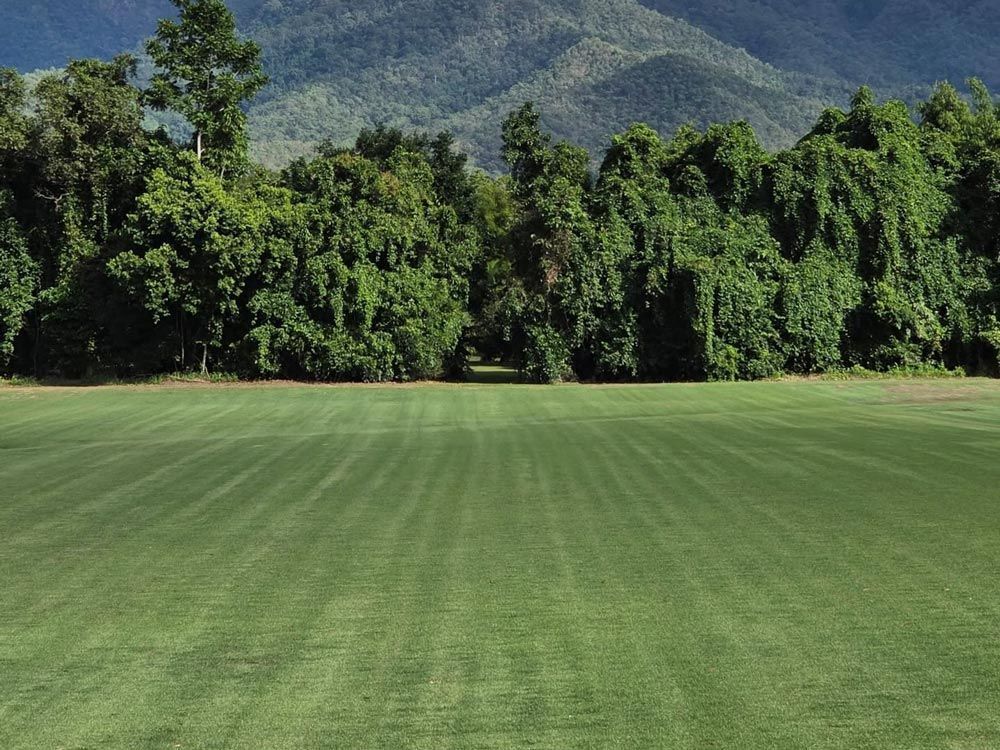
Cairns asks more of a lawn than heat alone. Our long humid monsoon season and extended cloud cover shape everything from how often you mow to when a feed is worth applying, which is why a seasonal routine will always beat a fixed one.
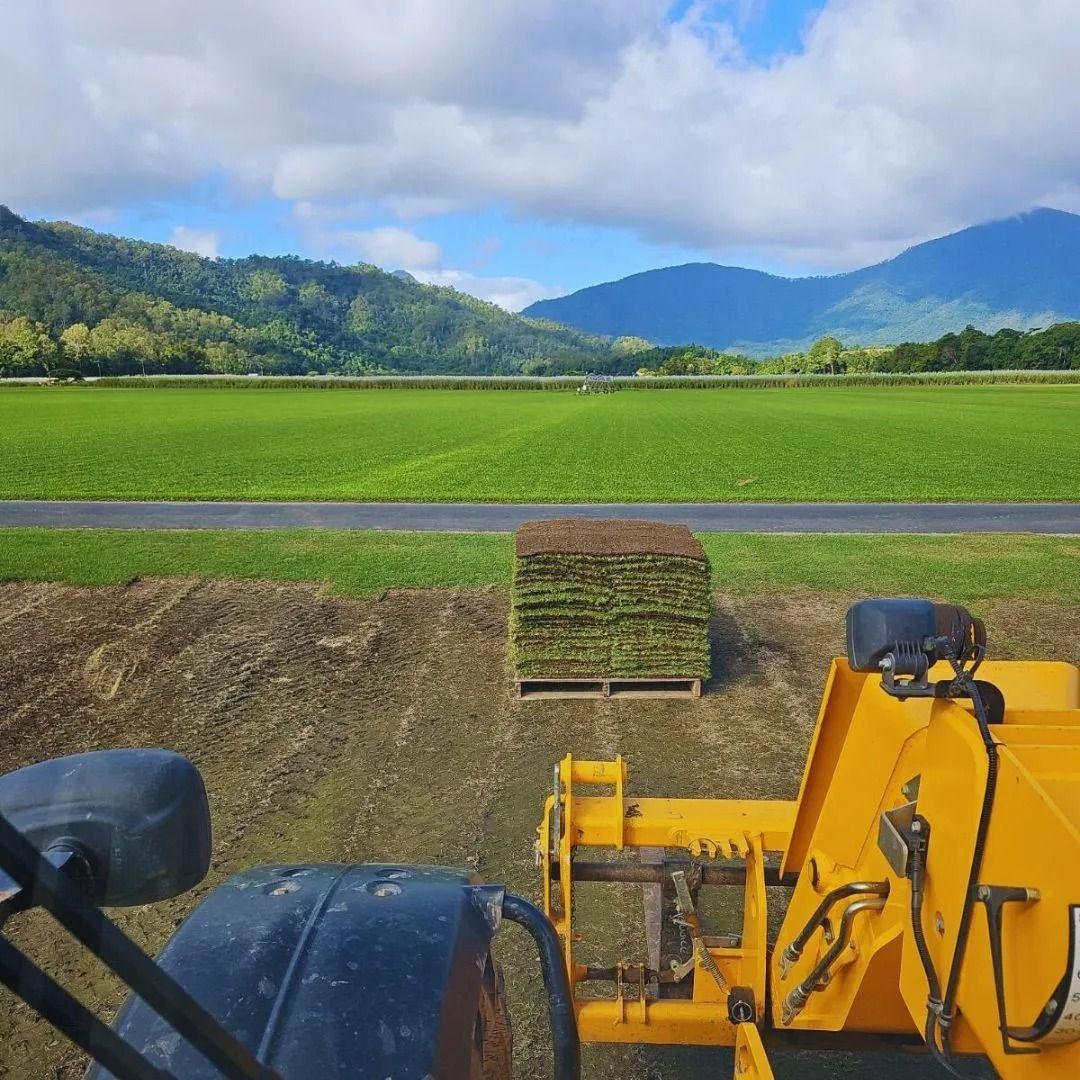
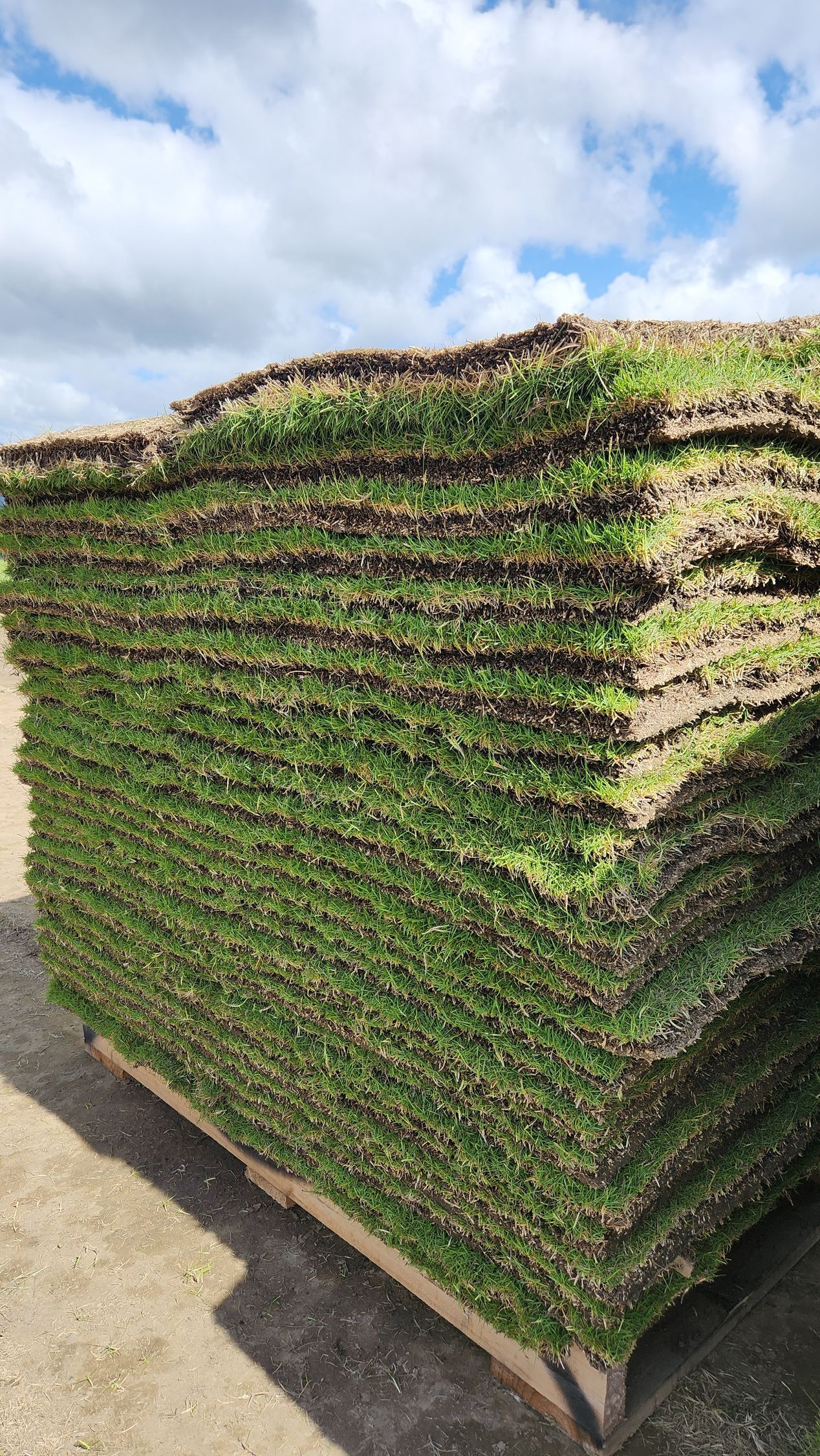
At Tropical Lawns, we have grown turf in Cairns since 1989, across 60 hectares of alluvial river-flat soil on the Mulgrave and Little Mulgrave Rivers. We work with the same conditions your lawn does, so our advice comes from what performs here rather than what works further south.
Our Farm Shop stocks the LawnPride fertiliser and turf-nutrition range, including GreenXtra, Maintain, GroTurf and Tracemaxx, alongside herbicides to keep weeds in check.
Get in touch with our team if you would like a hand matching products to the season ahead.
Frequently Asked Questions
How often should you fertilise a lawn in Cairns?
Most established lawns do well with a feed every six to eight weeks through the growing season, though the wet months often call for lighter applications more frequently because rain moves nutrients through the soil quickly. Growth rate is a better guide than the calendar. A lawn that has slowed down needs less than one still growing hard.
Why does grass turn yellow during the wet season?
Yellowing after prolonged rain usually points to nutrient loss rather than disease, since heavy downpours wash nitrogen and trace elements below the root zone. Extended cloud cover adds to it by limiting light. If the yellowing appears in spreading patches rather than across the whole lawn, fungal activity is the more likely cause.
Can you mow a lawn while the ground is still wet?
It is generally better to wait. Mowing saturated soil compacts the ground, tears the leaf instead of cutting it cleanly and can leave ruts that take months to recover. When constant rain makes waiting impractical, raising the cutting height and keeping the blades sharp reduces the damage.
When is the best time to treat weeds in a tropical lawn?
Pre-emergent treatments work best applied before the wet season begins, since they stop seeds germinating rather than killing established plants. Post-emergent products suit weeds already growing and are most effective on mild days without rain forecast. Checking the label against your grass type matters, as some products damage sensitive varieties.